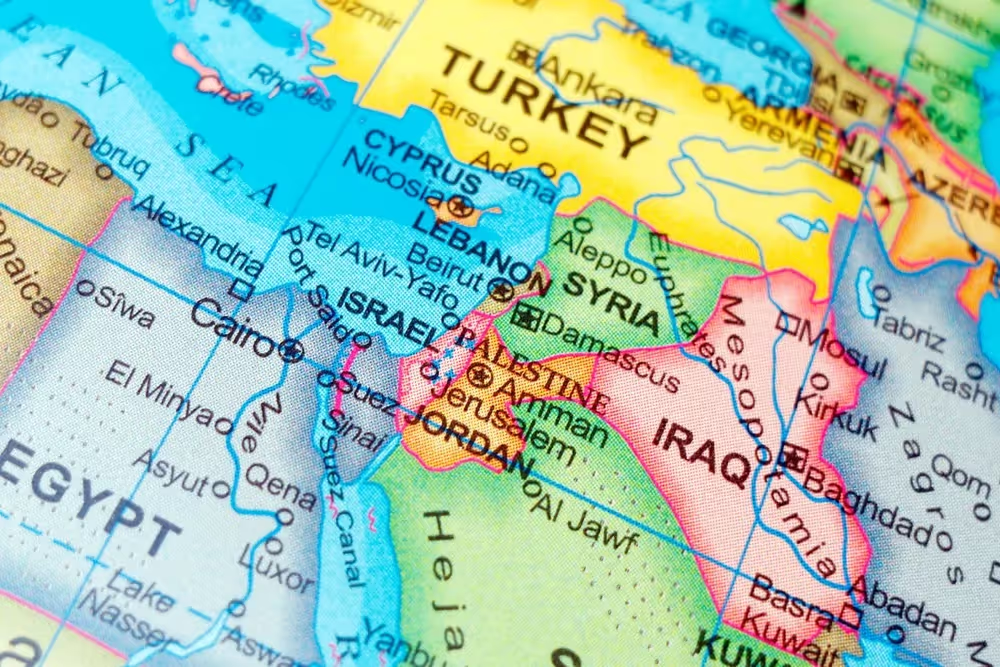
Symposium: What Does the Middle East Mean to US?

A Civitas Outlook Symposium on the Middle East and America.
The Trump administration is moving fast and willing to break things in the early days of controlling the executive branch of government. One of those breakable elements is the Middle East strategy that America has pursued for decades. Has it served American interests well? Would a sharply contrasting approach better serve American interests? Moreover, have recent regional developments indicated a new course for America for its strategic interests in the Middle East? In short, what does the Middle East now mean to America?
Civitas Outlook asked Elliott Abrams, Jonathan Schanzer, and John Yoo to address these questions in an online symposium titled “What Does the Middle East Mean to U.S.?”
Elliott Abrams "The Changing Calculus of Power in the Middle East"
Jonathan Schanzer "Disruptions and Challenges in the Middle East"
John Yoo "The Competing Tensions in America's Middle East Policy"

Politics
%20Richard%20Samuelson%20%20-%20Is%20American%20Nationalism%20Still%20Creed-able_-1.jpg)
Is American Nationalism Still Creed-able?
We are not there now, but there is reason to worry that the United States is in danger, if we are not careful, of ceasing to be a nation with the principles of 1776 at its core.

National Civitas Institute Poll: Americans are Anxious and Frustrated, Creating a Challenging Environment for Leaders
The poll reveals a deeply pessimistic American electorate, with a majority convinced the nation is on the wrong track.
.webp)
%20(1).avif)


Proxy Firms Don’t Have to Disclose Conflicts. That Should Change
The firms whose advice can move those votes bear no comparable duty for the advice itself. States can close that gap by applying an enduring standard from the Supreme Court.

Texas May Soon Have More People Than California — Here’s Why
California natives are voting with their feet.







.jpg)